Houston Homes Don’t Get an Off-Season: The August Projects That Protect, Cool and Transform Your Property

By Armantel, LLC | Houston, Texas
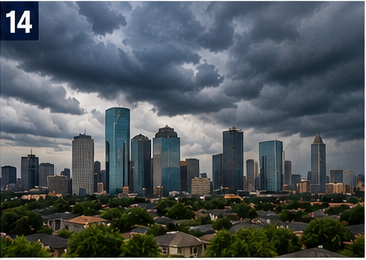
August in Houston is not subtle.
The afternoon heat presses against the roof. Air-conditioning systems work overtime. Sudden thunderstorms test gutters, flashing and exterior seals. Meanwhile, the heart of hurricane season reminds property owners that the smallest maintenance issue can become a major repair when severe weather arrives.
As of early August 2026, the National Weather Service reported Houston-area heat-index values reaching approximately 102°F to 107°F, with increasing chances for showers and thunderstorms later in the week.
That makes August more than another month on the construction calendar.
It is the month to ask one important question:
Is your property prepared for the rest of the Houston summer—or simply surviving it?
At Armantel, we believe the best projects do more than improve how a property looks. They protect the structure, reduce future problems, make everyday life more comfortable and create lasting value.
Here are the Houston projects worth prioritizing this August.

1. Start at the Top: Your Roof Is Houston’s First Line of Defense
A roof can appear fine from the driveway while hiding damaged flashing, lifted shingles, deteriorated sealant, clogged drainage paths or moisture intrusion.
Those small defects matter because August sits inside the Atlantic hurricane season. The National Weather Service’s 2026 Houston/Galveston hurricane guide emphasizes preparation before hazardous weather reaches the area—not after damage has already occurred.
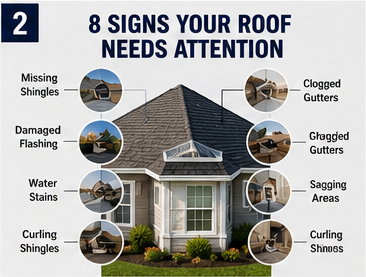
Warning signs Houston property owners should not ignore
Look for:
Missing, lifted or curling shingles
Dark ceiling stains
Soft roof-deck areas
Damaged flashing around vents and chimneys
Sagging gutters
Water collecting near the foundation
Loose fascia or soffit
Granules accumulating in downspouts
Previous storm damage that was never professionally evaluated
A roof inspection is especially important after repeated heat exposure. High temperatures can accelerate deterioration in roofing components, sealants and exterior materials.
August roofing projects to consider
Armantel can help evaluate and coordinate:
Shingle-roof repairs and replacement
Low-slope roofing systems
Torch-down applications where appropriate
Metal roofing and carport roofing
Flashing and penetration repairs
Roof-deck replacement
Fascia and soffit repairs
Gutter and drainage improvements
Storm-damage documentation
Preventive roof maintenance
A roofing project should never be treated as a cosmetic purchase. It is a building-envelope investment that protects insulation, drywall, flooring, electrical systems and everything beneath it.
The most expensive roof problem is often the one allowed to reach the interior.
2. Cool the House Before Replacing the Air Conditioner
When a Houston home struggles to stay cool, the HVAC unit is often blamed first.
But the real problem may involve the building envelope: the roof, attic, insulation, wall penetrations, doors, windows and gaps through which heat and humid air enter.
The U.S. Department of Energy identifies insulation and air sealing as essential parts of a home’s thermal envelope. Proper improvements can help control heat transfer and reduce energy consumption.
DOE building-science guidance also notes that air sealing between the attic and conditioned living space can reduce energy loss and help prevent moisture-related problems.
High-impact summer efficiency projects
Consider combining your remodel with:
Attic air sealing
Attic-access insulation
Weatherstripping
Door and window sealing
Improved attic insulation
Reflective or performance-oriented roofing materials
Ductwork evaluation
Smart thermostat installation
Energy-efficient lighting
Window and exterior-door upgrades
Ventilation and humidity-control improvements
For Houston’s hot, humid climate, improvements should address more than temperature. They should also consider moisture control, indoor-air quality, durability and proper ventilation. The Department of Energy specifically publishes construction guidance for hot-humid climate zones focused on energy savings, affordability, durability and healthier indoor environments.
Why a whole-house approach matters
Installing a powerful new air-conditioning system in a poorly sealed house is like filling a bucket with holes.
The equipment may run longer, energy bills may remain high and certain rooms may still feel uncomfortable.
A better process is:
Identify where heat and moisture are entering.
Correct insulation and air-leakage issues.
Evaluate HVAC performance and duct distribution.
Upgrade equipment only when justified.
Verify that the improvements work together.
That is how a renovation becomes a performance upgrade—not merely a product replacement.

3. Transform the Bathroom Into a Daily Escape
August heat has a way of making a cool, clean and well-designed bathroom feel even more valuable.
Bathroom remodeling remains one of the most emotionally satisfying improvements because it affects the beginning and end of every day.
A strong Houston bathroom remodel should combine appearance with water management, ventilation, slip resistance, storage and long-term maintenance.
Features homeowners are requesting
Popular 2026 bathroom directions include:
Walk-in showers
Frameless glass
Large-format tile
Shower benches
Recessed niches
Rainfall and handheld shower systems
Floating or furniture-style vanities
Layered lighting
Backlit mirrors
Improved ventilation
Warm wood finishes
Natural stone textures
Accessible layouts
Wider shower entrances
Low-threshold transitions
Current renovation forecasts also show growing interest in spa-style primary bathrooms, wellness improvements and accessibility features such as walk-in showers.

What separates a quality bathroom from a quick makeover
A beautiful bathroom can still fail if the waterproofing behind the tile is wrong.
The most important work may eventually become invisible:
Proper substrate preparation
Waterproof membranes
Correct shower-pan slope
Drain integration
Plumbing pressure testing
Moisture-resistant materials
Exhaust ventilation
Proper tile movement joints
Sealed penetrations
Documented installation
Armantel approaches bathroom remodeling as a construction project—not simply a decorating exercise.
The tile is what you see.
The waterproofing is what protects your investment.
4. Rebuild the Kitchen Around How You Actually Live
The kitchen is no longer just where meals are prepared. It is where families gather, guests congregate, schedules are managed and daily life unfolds.
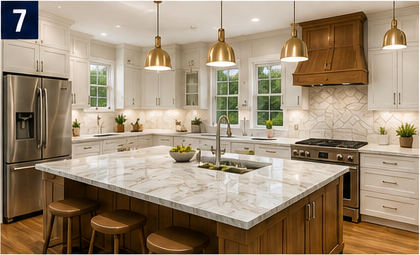
Houston’s mid-2026 design market has shown strong interest in white-oak cabinetry, concealed working pantries, upgraded appliance packages, wet bars and layouts that make kitchens more functional without losing warmth.
Other 2026 renovation trends favor closed cabinetry, practical storage, natural materials, light countertops and more personalized spaces instead of generic all-white interiors.

Kitchen improvements with real daily value
Consider:
New cabinet layouts
Soft-close doors and drawers
Deep drawer storage
Trash and recycling pullouts
Hidden appliance storage
Walk-in or working pantries
Larger islands
Improved task lighting
Under-cabinet lighting
Durable countertops
Better electrical distribution
Dedicated appliance circuits
Improved ventilation
Water-resistant flooring
Breakfast or beverage stations
The best kitchen remodel begins before demolition
Before removing cabinets, confirm:
Which walls are load-bearing
Whether plumbing will move
Whether the electrical panel has sufficient capacity
Appliance specifications
Ventilation requirements
Cabinet lead times
Countertop fabrication schedules
Flooring transitions
Required permits
Temporary kitchen arrangements

Many renovation regrets stem from underestimated schedules, unexpected structural problems, poor contractor selection and materials that are difficult to maintain.
Good project controls matter.
A clear scope, realistic allowances, documented selections and an organized schedule can prevent the project from becoming an expensive series of surprises.
5. Make Outdoor Living Work in Houston—Not Against It
Houston homeowners love outdoor living, but a successful outdoor space must be designed for heat, humidity, rain, insects and intense sun.
A patio that looks beautiful in a photograph may remain unused if it lacks shade, airflow, drainage or protection from weather.
That is why Houston outdoor projects increasingly focus on covered structures, durable materials, integrated lighting and fully functional cooking spaces.
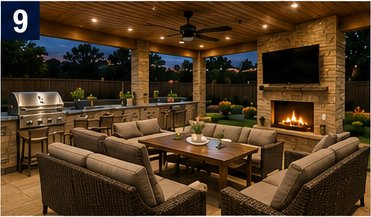
Designers report strong 2026 demand for outdoor kitchens equipped with built-in grills, refrigerators, ice makers, storage and dedicated preparation areas. Covered pergolas, pavilions and cabanas are becoming more important because they provide shade and support fans, lighting and retractable screens.
Features that make a Houston patio usable
A well-planned outdoor living project may include:
A covered patio or pavilion
An outdoor kitchen
A built-in grill
Refrigerator and beverage storage
Ceiling fans
Task and ambient lighting
Retractable screens
Weather-resistant cabinetry
Durable countertops
Drainage improvements
Slip-resistant flooring
Television and electrical provisions
Seating walls
Privacy screening
Landscape lighting
Fire features where appropriate

Houston-focused outdoor design guidance emphasizes shade, material durability, lighting and strong integration between the house and exterior living areas.
Think beyond the grill
The goal is not merely to place appliances outside.
The goal is to create an outdoor room that functions naturally.
That means considering:
Where smoke will travel
How guests will circulate
Where afternoon sun strikes
Whether the cook remains connected to the gathering
How rainwater drains
Where utilities will run
Which materials can tolerate Houston weather
How the space will be illuminated at night
Done correctly, the backyard becomes an extension of the home—not an area visited only twice a year.

6. Refresh the Exterior Before Storm Season Peaks
Exterior improvements can dramatically change curb appeal, but their most valuable role is keeping water outside the building.
August is a smart time to inspect:
Siding
Exterior paint
Trim
Doors
Windows
Caulking
Masonry joints
Fencing
Drainage
Gutters
Fascia
Soffits
Exterior penetrations
Why exterior sealing matters
Water rarely enters through the center of a wall.
It typically finds transitions:
Around windows
Near roof-to-wall connections
At utility penetrations
Through deteriorated sealant
Behind damaged siding
At improperly flashed openings
Where grading directs water toward the structure
Exterior painting should therefore involve more than applying a new color.
A responsible scope may require:
Washing and surface preparation
Removing failed coatings
Replacing rotted wood
Repairing cracks and joints
Recaulking penetrations
Priming repaired surfaces
Applying compatible exterior coatings
Inspecting drainage and runoff
The paint is the final layer.
The preparation determines whether the finish lasts.

7. Repair the Fence Before the Next Major Wind Event
Fences are often ignored until several panels are leaning or an entire section collapses.
Houston soil movement, moisture, wind exposure and aging posts can weaken a fence gradually.
Signs your fence needs attention
Leaning panels
Loose posts
Rot at ground level
Rusted fasteners
Broken rails
Gates that drag or no longer latch
Soil erosion around posts
Vegetation pushing against the structure
A fence project may include:
Selective post replacement
Full fence replacement
Gate rebuilding
Hardware upgrades
Staining or sealing
Metal-post conversion
Privacy enhancements
Commercial and residential fencing
Storm-damage repairs
A properly built fence adds privacy and security, but it should also be designed for drainage, wind exposure and maintainability.

8. Investors: Use August to Prepare Properties for the Fall Market
For Houston real-estate investors, August can be an important execution month.
Projects started now may be positioned for fall leasing, resale activity or year-end portfolio improvements.
The most effective investor renovations typically prioritize:
Roof integrity
Water intrusion
Mechanical reliability
Electrical safety
Plumbing performance
Durable flooring
Neutral but distinctive finishes
Functional kitchens
Clean bathrooms
Exterior presentation
Proper closeout documentation
Avoid over-improving the property
A profitable renovation is not necessarily the one with the most expensive finishes.
It is the one that:
Matches the neighborhood
Solves the property’s real deficiencies
Appeals to the target buyer or tenant
Minimizes future maintenance
Protects schedule and budget
Documents completed work
Preserves contingency for hidden conditions
Armantel supports investors with project planning, estimating, procurement coordination, construction management and closeout documentation.
For qualified investors, Armantel is also exploring construction-cost financing on a case-by-case basis, including promotional terms for selected projects.
The purpose is simple: help strong projects move forward without sacrificing documentation, control or quality.

9. Hurricane Readiness Is a Construction Strategy
Emergency preparation is not limited to bottled water and flashlights.
Property readiness also involves the physical building.
Houston’s Housing and Community Development Department is hosting a Disaster and Recovery Expo on Saturday, August 22, 2026, focused on preparedness, recovery resources and long-term resilience.
Property-readiness checklist
Before severe weather threatens, review:
Roof condition
Gutters and downspouts
Tree limbs near the roof
Exterior doors
Garage doors
Window seals
Fence stability
Outdoor equipment
Drainage paths
Sump or drainage pumps
Generator connections
Exterior electrical components
Insurance documentation
Current photographs of the property
Take dated photographs and videos before a storm.
Document:
Every exterior elevation
Roofing surfaces where safely accessible
Interior ceilings and walls
Mechanical equipment
Major appliances
Finished improvements
High-value contents
Documentation cannot prevent damage, but it can improve communication with contractors, insurers and other stakeholders afterward.
10. The Real August Question: What Happens if You Wait?
Delaying a purely decorative project may be harmless.
Delaying a roof leak, drainage defect, deteriorated seal or ventilation issue can turn a manageable repair into a larger reconstruction.
Consider the chain reaction:
A small roof opening allows moisture inside.
Insulation becomes wet.
Drywall stains or deteriorates.
Humidity increases.
Flooring or cabinetry may be affected.
Mold risk may develop.
The repair now involves several trades.
Construction costs are not driven only by the original defect.
They are driven by how far the damage is allowed to travel.
That is why August is an ideal month for inspection, prioritization and planning.
The Armantel August Project Plan
Not every property needs a complete remodel.
The right project begins with identifying what is urgent, what creates value and what can reasonably wait.
Armantel’s process is built around disciplined project delivery:
1. Assess
We review the property, visible conditions, objectives and available documentation.
2. Define
We establish scope, assumptions, exclusions and responsibilities.
3. Estimate
We develop pricing based on the known scope, required labor, materials and project conditions.
4. Plan
We coordinate procurement, sequencing, inspections and schedule requirements.
5. Execute
We manage the work with attention to quality, communication, safety and documentation.
6. Close Out
We organize completion photographs, warranties, outstanding items and relevant project records.
This documentation-first approach helps homeowners, investors and property managers understand what is being built—and what they are paying for.
Don’t Just Remodel for the Photograph
A viral “after” picture can generate attention.
But the real success of a construction project is what the photograph cannot show:
The flashing was installed correctly.
The shower was properly waterproofed.
The wall was framed and supported.
The wiring was safely coordinated.
The materials were suitable for Houston’s climate.
The scope was documented.
The project was closed out professionally.
That is the difference between a surface-level makeover and a responsible renovation.
At Armantel, we want every project to look impressive.
More importantly, we want it to perform.
Ready to Upgrade Your Houston Property This August?
Whether the priority is roofing, exterior repairs, a bathroom transformation, a new kitchen, an outdoor living space or investor-grade property improvements, August is the time to act before small problems become expensive ones.

Armantel, LLC
Houston General Contracting & Project Management
Strength. Precision. Integrity.
Your property should not merely survive Houston. It should be built to perform here.
Contact Armantel to schedule a project consultation and begin defining the right scope for your home, investment property or commercial space.


Comments